Research
Entity SEO for iGaming Brands: A Complete Structured Data Guide
Entity SEO means describing the real things behind a site, such as the operator, the brand, its websites, its pages and its authors, so that every page tells the same story. Structured data is how you write that story down for machines.
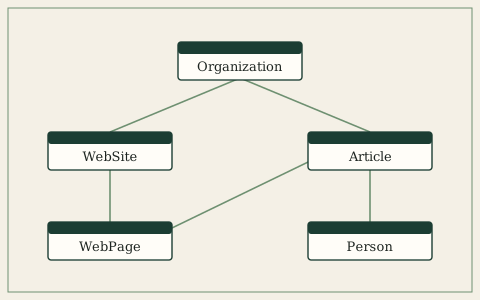
What entity SEO means on a gambling site
An entity is a single thing that can be identified: a company, a brand, a website, a page, a person, a game. Entity SEO is the work of describing those things the same way everywhere, so that search systems do not have to guess whether "Verdant Crown", "Verdant Crown Casino" and "Verdant Crown Gaming Ltd" are one business or three. On casino and sportsbook sites this matters more than usual, because the same brand often runs several domains, several licensed markets and several product lines.
Structured data is the written form of that description. Google says it uses structured data "to understand the content of the page", and recommends JSON-LD where a site's setup allows, because it is "the easiest solution for website owners to implement and maintain at scale". Google also says that all three supported formats, JSON-LD, Microdata and RDFa, "are equally fine for Google, as long as the markup is valid".
The examples on SchemaReel use fictional brands on reserved .example domains. Nothing here describes a real operator, and no real site was audited.
The core entity set for a casino or sportsbook site
Most iGaming sites need fewer types than people think. The table maps common page templates to the entity a page is mainly about and the entities it links to. Use it as a starting point, then remove anything that does not describe content readers can see.
| Template | Primary entity | Linked entities |
|---|---|---|
| Home page | WebSite (site name) and Organization | Logo, contact point, sameAs profiles |
| About or company page | AboutPage with the Organization as mainEntity | Legal name, parent organization where public |
| Help or news article | Article | Author (Person or Organization), publisher, BreadcrumbList |
| Game or category page | WebPage or CollectionPage | Game, game studio as Organization, BreadcrumbList |
| Independent review (publisher site) | Review of the brand | Reviewer as Person, publisher Organization |
| Author page | ProfilePage with a Person | sameAs profiles, employer by @id |
The entity pages explain each type in detail: Organization, WebSite, Article and BreadcrumbList.
Identity: names, legal names, @id and sameAs
Three properties do most of the identity work. name holds the brand readers see. legalName holds the registered company name, which is what a license register usually lists. sameAs holds reference pages that identify the same thing; Schema.org defines it as the "URL of a reference Web page that unambiguously indicates the item's identity."
The fourth piece is @id, the JSON-LD keyword that gives a node a stable identifier. When two blocks of markup use the same @id, they describe the same entity. Since January 2024, Google's own examples use URLs with a hash fragment for in-page identifiers, such as https://verdantcrown.example/#org. A short graph shows the pattern:
{
  "@context": "https://schema.org",
  "@graph": [
    {
      "@type": "Organization",
      "@id": "https://verdantcrown.example/#org",
      "name": "Verdant Crown Casino",
      "url": "https://verdantcrown.example/",
      "logo": "https://verdantcrown.example/media/logo-512.png",
      "sameAs": [
        "https://social.example/verdantcrown"
      ]
    },
    {
      "@type": "WebSite",
      "@id": "https://verdantcrown.example/#website",
      "name": "Verdant Crown",
      "url": "https://verdantcrown.example/",
      "publisher": {
        "@id": "https://verdantcrown.example/#org"
      }
    },
    {
      "@type": "WebPage",
      "@id": "https://verdantcrown.example/about/#page",
      "url": "https://verdantcrown.example/about/",
      "name": "About Verdant Crown",
      "isPartOf": {
        "@id": "https://verdantcrown.example/#website"
      },
      "about": {
        "@id": "https://verdantcrown.example/#org"
      }
    }
  ]
}The rules that keep this consistent across domains and markets are in designing stable entity identifiers and entity consistency across properties.
What Google uses structured data for
Google's general guidelines are short and strict. Markup must describe content that is visible to readers: "Don't mark up content that is not visible to readers of the page." It must be a true representation of the page, and Google names "fake reviews" as an example of misleading markup. Items missing required properties are not eligible for rich results. And even correct markup carries no promise: "Google does not guarantee that your structured data will show up in search results."
When markup breaks these rules, Google can apply a structured data manual action. Google says this means "a page loses eligibility for appearance as a rich result"; rankings are not affected by that action.
Two practical consequences follow for gambling sites. First, markup should never add facts the page does not show, such as a license number, a rating or a bonus that is not on the page. Second, a validation pass is not the end of the work: the checklist in our workbench, the Schema Markup Validator and Google's Rich Results Test each answer a different question, as the validation guide explains.
What changed in Google Search, 2023 to 2026
Several features that iGaming SEO advice once leaned on have gone. In August 2023 Google limited FAQ rich results to well-known, authoritative government and health websites and limited How-to to desktop; it removed the How-to documentation on September 14, 2023. The sitelinks search box was removed from results from November 21, 2024. In 2025 Google announced the phase-out of seven more structured data features and retired six of them, keeping Book Actions, and in May 2026 it stopped showing FAQ rich results altogether: its updates log says the feature "will no longer appear in Google Search starting May 7, 2026".
None of this makes structured data less useful for describing a site. It does mean that any plan built around "getting FAQ snippets" or "getting a search box" is out of date. The full dated list is in Google structured data changes, 2023 to 2026.
What AI features need from a page
Google's guidance on AI Overviews and AI Mode is direct: "There are no additional requirements to appear in AI Overviews or AI Mode, nor other special optimizations necessary." It adds that you do not need "new machine readable files, AI text files, or markup", and that "There's also no special schema.org structured data that you need to add." The same page lists making sure structured data matches the visible text as an ordinary good practice.
So the honest position is narrow. Consistent entity markup helps systems read a page correctly. It is not a switch for AI citations, and SchemaReel does not claim it is.
Gambling-specific limits
- Only describe what is licensed and true. If a brand is not licensed in a market, do not publish markup that presents it to that market. In Australia, for example, online casino-style games are a prohibited service under the Interactive Gambling Act, while licensed online wagering on sport is allowed.
- No self-serving stars. Google does not show review stars for an organization that controls the reviews about itself, as the review markup research explains.
- No invented reviews. Google's review snippet guidelines say: "Don't include fake or undisclosed incentivized reviews on your page or in your structured data markup." Consumer law in the UK, US, Canada and Australia also targets fake reviews.
- Keep safer gambling on the page. Markup cannot carry responsible gambling duties. Limits, age rules and help lines belong in the visible content.
A working order for a new site
- List the real entities: the company, each brand, each domain, each author.
- Give each one a stable
@idon the domain that owns it. - Mark up the home page with WebSite and Organization, then add Article and BreadcrumbList to content templates.
- Check syntax, then Google requirements, then compare markup with the visible page.
- Recheck when templates change and when Google updates its documentation.
Questions
Does structured data improve rankings?
Google describes structured data as a way to understand page content and to become eligible for rich results. Its documentation makes no claim that markup is a ranking factor, and a structured data manual action removes rich result eligibility without affecting rankings.
Which format should an iGaming site use?
JSON-LD, unless your platform makes another format easier. Google recommends JSON-LD and says all three supported formats are equally fine when the markup is valid.
Do I need special markup for AI Overviews?
No. Google says there is no special schema.org structured data needed for AI Overviews or AI Mode. Keep markup accurate and matched to the visible text.
Sources
How SchemaReel chooses, reads and dates its sources is set out on the data sources page.
- Google Search Central, Introduction to structured data markup, last updated December 10, 2025.
- Google Search Central, General structured data guidelines, last updated July 10, 2026.
- Google Search Central, AI features and your website, last updated December 10, 2025.
- Google Search Central, Latest Google Search documentation updates, read October 26, 2026.
- Google Search Central, Review snippet structured data, last updated September 8, 2026.
- Schema.org, sameAs, V30.1 (2026-09-16).
- Australian Government, Protecting Australians from illegal online gambling services, August 2017.